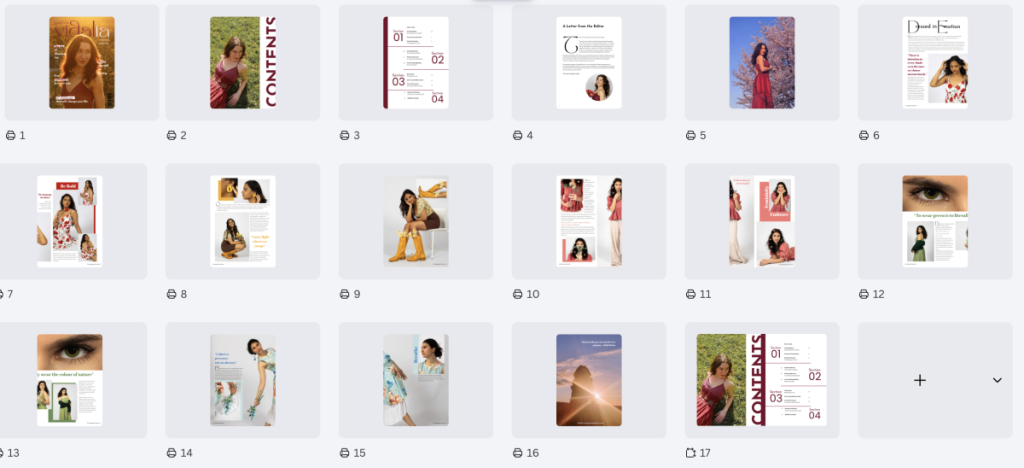
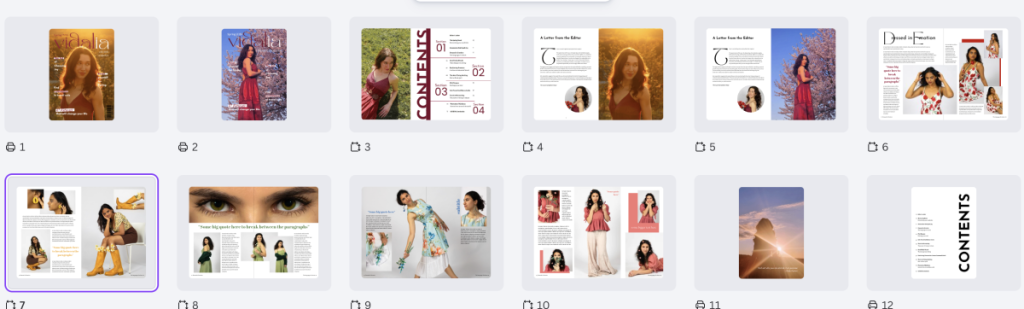
There is something about the way the pages move into each other that I don't really like, so for this I will change the way they are ordered.
What was left now was writing the actual article. I'll make a short draft for each here and add or substract if needed, based on the page design and how the text fits.
Introduction:
Clothing is never just fabric. Every outfit carries meaning, even if we are not consciously aware of that while choosing it. Fashion, in this sense, is not only a visual language, but also an emotional message. The colours we wear shape how we feel and influence how others perceive us.
Red:
Wearing red is a statement. Red stands out as one of the most emotionally charged and visually dominant colours. Whether it's a crimson dress at a formal event, or a bright red sundress wore in the sun, this shade carries energy and undeniable presence. A colour that commands attention. It naturally draws the eye and can instantly elevate an outfit. Wear red to communicate confidence, passion, and self-assurance. Even red accessories can transform a minimalistic outfit into something memorable. Red is also the colour of love, wear this colour if you want to look even more attractive.
Red transcends trends, and remains a constant presence on runways in Paris, Milan and New York. It is timeless, yet always modern.
Psychologically, red is one of the most stimulating colours the human eye can perceive. It is linked to strong emotions such as love, desire, energy, and urgency. It immediately captures attention. Red feels empowering, it can be like stepping into a more confident version of yourself. It becomes even more striking under spring light, where the sun intensifies its vibrancy. It complements the red flowers that bloom in this season.
Pink:
Pink has evolved far beyond its traditional associations. Once seen as just delicate or feminine, now it is also described as strong, and it appears in structured fashion, from tailored suits to mini dresses. Designers use pink to balance softness with strength. From pastel rose to neon magenta, pink offers much versatility.
Linked to calmness, warmth, and emotional openness, pink can feel soothing, gentle and encourage you to embrace your femininity. Stronger shades bring confidence, playfulness and make you feel youthful. Wearing pink can project approachability without losing individuality.
In spring, it creates an airy, romantic look, while also bringing energy and fun. Pink thrives in spring, being one of the centred colours. Famous pink shades are soft pastels and vibrant coral tones.
Yellow:
One of the most expressive colours in fashion, yellow ranges from soft almost neutral tonnes to intense sunflower and neon shades. It is often used to bring optimism and visual impact. Wear yellow to feel an instant mood boost and mental stimulation. Enhance your visibility and create a cheerful, energetic impression.
This colour mirrors sunshine, it feels natural to wear it in the season where the sun begins to reappear and everything becomes warmer. Flowing yellow dresses, linen tops, and other accessories instantly evoke warmth and joy. Soft pastel yellows feel elegant yet subtle, while bold lemon tones create a standout look.
Green:
Becoming increasing popular in modern fashion, green is especially on the rise with nature-inspired and sustainable looks. To wear green is to literally wear the colour of nature, and be in tune with it. It is tied to nature, balance, and restoration. This colour can be seen in shorts, formal suits, or long dresses. Also considered one of the most visually restful colours, it is associated with harmony and well-being. Wearing green can feel grounding, as if you reconnect with something so steady.
Green is often used in fashion to signal freshness, renewal, and individuality. Different shades create very different effect. From the earthy and minimalistic looks of olive and sage green, to the \"making a statement\" emerald. It works beautifully for spring because it is the season where green reappears, therefore blending seamlessly with the outdoor environment.
Blue:
A universally worn colour, largely because it feels both safe and sophisticated -- and because jeans are very easy to style. Blue adapts easily across styles, from casual streetwear to formal tailoring. Wear this colour when you need to feel calmness, stability, and relaxed. It can lower visual tension and create a sense of reliability. This is why it is frequently used in uniforms and everyday wear, making it one of fashion's most dependable colours.
In spring, it feels refreshing. Navy suits reflect professionalism, while denim remains a global fashion trend. Light blue mirrors the sky, creating a cool contrast against the heat.
To do these paragraphs, I wrote some things in my own words and then further read about it to inform myself and write more accurate content.
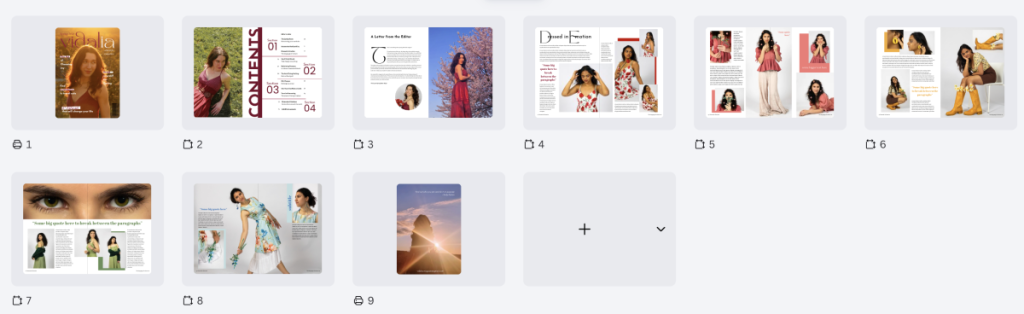
In the final version, I switched yellow with pink, so that the first two page pairs have one model, and the rest have the other. This would also help me separate the pages when I post them on Issuu, as the max for free publications in 10 pages.